For all those clean energy hopefuls fretting over the dramatic and costly collapse of Solyndra, USA Today says that studies support investments in clean tech industries. Besides, these are the growing pains of a nascent industry.
There is no need to let one well-publicized failure taint the progress of building a clean energy economy.
But certainly those opposed to clean energy are eating up Solyndra's failre. Course they may be a bit tongue tied because their common refrain is that clean energy solutions should be "market based", and it was the market that tanked Solyndra.
The market for silicon in this case. It changed dramatically because Chinese businesses entered the fray. Since the Chinese government sees the global opportunity and has seized it, nearly all aspects of a renewable energy economy are being or will soon be lead by the Chinese.
Meanwhile, US politicians on the federal level are either in the pockets of big fossil fuel or are more interested in keeping their jobs.
But I digress.
"Energy-efficiency loans are a stable investment with low default rates and large-scale potential, according to a study released Tuesday by the American Council for an Energy-Efficient Economy. The review of 24 loan programs found default rates ranged from 0% to 3% throughout the life of the financing and remained largely unchanged despite the near collapse of the real estate market over the past few years," according to USA Today.
Keep in mind, too, that businesses fail all the time in all aspects of the economy. It happens. Don't get me wrong, the Obama Administration and the Department of Energy should be asked the hard questions of what happened on their watch.
Anyway, one Solyndra should not stop the renewable energy economy. Renewable energy needs inspiration and innovation, and government support to bring down the cost of clean energy while the true cost of fossil fuels -- in health care, wars, lost ecosystem services -- becomes transparent.
Thursday, September 29, 2011


Wednesday, September 28, 2011
PleaseTry Again Diana Nyad
 |
| Diana Nyad |
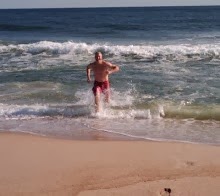
But this story is inspiring. Nyad should not be disappointed. She should be proud she tried, and I hope she tries again.
The simple power of the oceans is clearly a theme to take from this story -- if not the currents, if not the sharks, if not the swells, then the jellyfish -- but let's not miss the blazing power of the human spirit.
The drive, the will, the ability to do things so many said could not be done. At least even to try. It's the same spirit we need to tap in parts big and small to move to the renewable energy economy and to ensure healthy seas.
Please try again Diana Nyad, you rock.
Photo from the Associated Press.
Tuesday, September 27, 2011
One Sea Turtle, Lots of Good

A sea turtle was found with a spear lodged in its head in the Florida keys. The remarkable Caretta caretta lived but it begs the question: who is the jerk who speared him in the first place? Suppose it's not surprising.
But look at all the good that came out of one person's moment of smallness. Doctors operated on the turtle and saved it. It was a close one with the spear a breath away from vital parts.
Meanwhile, "a $16,000 reward is offered for tips that lead to the arrest and conviction of those responsible for the injury. Much of the money came from local commercial fishermen and boat captains. The National Oceanic and Atmospheric Administration's Marine Fisheries Service is investigating," according to CNN.
This kind of inspired response from fishermen and boat captains? The world is getting better.
Under a beautiful blue September morning sky, the turtle was released near the Seven Mile Bridge in Marathon, Florida, according to the story.
Friday, September 23, 2011
Good News Friday

Due to improvements in fishing gear, accidental capture and killing of sea turtles dropped 90 percent, according to the International Business Times.
Sounds like a Good News Friday.
"Researchers used data collected from 1990 to 2007 by the National Marine Fisheries Service (NMFS) to determine bycatch rates across more than 20 fisheries. These fisheries are operating in Atlantic waters from the Gulf of Mexico to the Canadian border, and in the Pacific Ocean, along the West coast and around Hawaii."
Thursday, September 22, 2011
Just Say It
Al Gore and countless others did their 24 hour Climate Change reality show last week. Pretty cool to have follow the sun coverage across the planet. It's all about confronting the deniers.
This is good stuff that needs to happen but it is geared mostly toward affirming that climate change is happening. Here's the melting polar caps, here's the sea level rise, here's the extreme weather, that kind of thing.
But there is also a need for affirmation that climate change is the result of man burning fossil fuels.
Just say it.
This is good stuff that needs to happen but it is geared mostly toward affirming that climate change is happening. Here's the melting polar caps, here's the sea level rise, here's the extreme weather, that kind of thing.
But there is also a need for affirmation that climate change is the result of man burning fossil fuels.
Just say it.
Tuesday, September 20, 2011
China's Pleasant Beluga Surprise

Hong Kong's Ocean Park apparently recently said no to capturing and displaying endangered Beluga whales according to Seattle pi.
With the demand for shark fins and rhinoceros horns coming from China at the expense of ecosystems everywhere (and museums), here is something good, if not surprising, to celebrate.
Would be but a wish for it to turn into a trend. When a billion people decide to do something, the world feels it.
Monday, September 19, 2011
Kiwis Go Into That Dark Basement
New Zealand is learning the hard way, as so many other nations have and are. The oceans are finite and yes, we can remove entire populations of important and valuable marine species. Nearly scripted, the government is defensive.
To see this played out again, in another fishery, in another place, in another ecosystem, is akin to watching a standard horror movie: "Don't go into that dark basement where you just heard all those thumps and groans. Don't go alone with a faulty flashlight. Don't do it!"
"Fishing for orange roughy started in New Zealand and grew rapidly through the 1980s and 1990s. However, most of the fisheries were overexploited and catch levels have either been dramatically reduced or the fisheries closed all together," said Dr Malcolm Clark, a New Zealand-based fisheries biologist, who helped write the paper.
"The same pattern has been repeated in Australia, Namibia, the South West Indian Ocean, Chile and Ireland. It demonstrates how vulnerable deep-sea fish species can be to overfishing and potential stock collapse," according to Stuff.co.nz.
Australia declared orange roughy a threatened species in 2006. The species takes 30 years to reach sexual maturity and can live up to 125 years. Do the math.
To see this played out again, in another fishery, in another place, in another ecosystem, is akin to watching a standard horror movie: "Don't go into that dark basement where you just heard all those thumps and groans. Don't go alone with a faulty flashlight. Don't do it!"
"Fishing for orange roughy started in New Zealand and grew rapidly through the 1980s and 1990s. However, most of the fisheries were overexploited and catch levels have either been dramatically reduced or the fisheries closed all together," said Dr Malcolm Clark, a New Zealand-based fisheries biologist, who helped write the paper.
"The same pattern has been repeated in Australia, Namibia, the South West Indian Ocean, Chile and Ireland. It demonstrates how vulnerable deep-sea fish species can be to overfishing and potential stock collapse," according to Stuff.co.nz.
Australia declared orange roughy a threatened species in 2006. The species takes 30 years to reach sexual maturity and can live up to 125 years. Do the math.
Subscribe to:
Posts (Atom)



 Posts
Posts

