Levity in catastrophe? Not really, the Gulf gets worse everyday. The oil keeps blocking out the light. But as I've said, people can only take some much depressing news.
So Greenpeace UK has been running a contest for a re-design of BP's logo. People have sent in many, and many good ones. Run them as a slide show and it might make you feel mildly better after awhile. Maybe. Click here.
Thursday, June 10, 2010


Tuesday, June 8, 2010
Happy World Oceans Day...Whoopeee
Happy World Oceans Day. Given the Gulf disaster, celebrating today is like having your birthday fall on the day you break up with your boyfriend, or celebrating a big anniversary on the day you get word that an old friend with whom you have lost contact has passed away.
With ninety seven percent (that phrase was a contender for this blog's name) of the Earth covered in saltwater, there are plenty of things to celebrate on World Oceans Day. It's hard to think of those things though, when the Gulf just won't stop bleeding.
As I attempt to walk the line between optimism and reality, I hope a collective rage does not turn to acceptance, followed closely by its insidious cousin -- apathy. Rage is a powerful motivator and could push people to do what they can to build a green energy economy. I wouldn't want people to write off the Gulf as gone, a done deal, as we look to cheer ourselves up by considering the hundreds of ocean places across the blue orb that are full of life and wonder. But human beings can only take so much negativity, and yes, those places are worth celebrating.
So, send an e-card to celebrate World Oceans day courtesy of our friends at the Nature Conservancy.
Monday, June 7, 2010


Sunday, June 6, 2010
What's at Stake: One Personal View
My parents live on a beautiful Gulf barrier island off the northwest Florida coast. Marine birds frequent the area including the ridiculous plovers running furiously from the last lick of each wave, and the preposterous, large heron that alights on my parent’s porch each morning even though they live a few blocks from the beach. Somebody named him Fred.
He appeared silently one morning while I sat there eating breakfast. The sun shone through his long, sharp beak making the blood vessels inside show like small rivers. His bright orange eye fixated on me a little too intensely though, so I quietly moved a few feet away, taking my bowl of Cheerios with me.
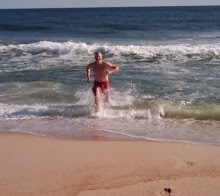
A little later, I walked to the beach with my goggles and a shirt. The light is so bright everywhere on this island you get the sense that it could penetrate even the coldest of hearts. Past the sprawling Banyan, the palms, the tall conifers, and the squat, leafy shrubs, I emerged on the brilliant white beach lining the waters of the Gulf.
I had to squint as the sand seems to blast pure white light into my eyes. I held my hand over my face to make a temporary shadow. I walked down to near the edge and sat down. A couple in their seventies walked by, probably on their daily morning stroll.
Two kids were on their hands and knees nearby as they combed the beach for shells. Just offshore, a lone brown pelican glided swiftly, a mere inches above the surface of the water. I took off my cotton t shirt and placed it next to me on the fine powdery sand. I replaced it with a thin rash guard with an emblem on the chest like a superhero.
Earlier I had wondered if I would actually get out to the water to do this. But I am inspired, regularly, by this place. I walked to the edge of a young sand spit shaped like a ponytail swishing out into the water. I looked to the north, imagining for a moment all the habitats that line the Gulf, from this tropical haven to the panhandle, along the southern states’ wetlands and bayous and estuaries, and all the way to the Texas coast.
I waded in and spit on my goggles. The water was chillier than I wanted it to be. I looked at my pale feet kicking up sand in the clear water below. When I was waist deep, I put on the goggles and dove in softly.
The first thing I saw was the invisible energy of the waves mirrored in the sandy bottom. The symmetric ridges cast small underwater shadows. As I swam, a ray moved away from me. Sand burst off its wings as it stirred. Schools of fingerling translucent fish darted here and there. A few sand dollars lay half-shrouded in the sand, and buried clams sent up lines of tiny bubbles. Around the bend, at the main fishing pier, sons and daughters often catch jacks, grunts, scamp, and the occasional shark.
I push through the water and where it gets deeper and a little darker, I momentarily think about the beasts that may come and eat me. A five foot blacktip shark slicing through my soft liver with a shrug. A few of its gray-white razor teeth delving deep into my burgundy organ. My puff of blood briefly clouding the clear water. I realize how irrational that thought is for hundreds of reasons, but I still entertained it. It makes me smile into the blue.
I knew the current would make for a fast and easy swim going north, so I rode that up and turned around within sight of the towering pines about a half mile up. I ended with a strong pull against the powerful sea. I worked hard to get back to where I started. When finished, I sat on the sand enjoying the burn in my muscles and the sound of the water.
I looked briefly for any trace of our bikes from last night. We had watched the sunset at the tiki bar a mile or so down the beach. For the daily event, people sat at the tables stuck in the sand or they sat on the sand. Everyone turned their faces to the setting sun and grew quiet.
In the smoldering afterglow, we rode rusty beach cruisers home along the water’s edge. I had wondered if riding bikes unnecessarily erodes the beach -- probably not great for the beach -- but thought the impact was minimal between the fat tires and the hard packed sand.
I gathered my shirt and goggles and walked off the beach past the spot where my sister years ago took all her wedding pictures. I remember she was laughing as she pulled up her white dress to avoid the waves at her ankles. I walked back through the neighborhood feeling capable and content. I glanced for Fred on the porch, but he had moved on.
Thursday, June 3, 2010
A Glimpse of What's at Stake in the Gulf
Probably because there is so much to report on BP's disaster, the ever-widening closure of the Gulf of Mexico fishery appears almost as a footnote. Yesterday, it was quietly increased to 31 percent. Meaning nearly a third of the fishery is closed to fishing because of BP’s mess. As long as oil keeps spewing, it’s entirely possible the whole fishery will be closed.
It begs a question. Aside from my lamentations and my pounding the Thesaurus for more ways to say “disaster”, what is really at stake in concrete terms? The excellent folks at the Natural Resources Defense Council (NRDC) have already come up with answers in the form of a concise report.
Among other things including the dollar value of the Gulf, the report shows that BP’s disaster could not have come at a worse time. Spring is the time for renewal and reproduction in the wild world. Nearly every creature in the Gulf is doing what their most basic life force tells them to do -- procreate and carry on the species. What’s more vulnerable to a thick, ominous cloud of petroleum and toxic dispersants than an adult of a species? A newborn.
Highlights follow and you can find the full NRDC report here. A glimpse of what’s at stake:
“In 2008, the combined value of several key species groups for all five states in the Gulf region – shrimp, oysters, blue crab and red snapper – was more than $474.4 million.
Unfortunately, many of the Gulf region’s key species are likely to be the first casualties of the Deepwater
Horizon oil spill. Oysters are largely stationary and cannot flee the low dissolved oxygen areas caused by oil on the water’s surface.The timing of this spill will impact the newly spawned larvae of shrimps and crabs – the catch of the future – as they are largely immobile and likely to be closer to the water’s surface and any floating oil.”
In 2003, the Gulf of Mexico’s ocean economy:
The Value of the Ecosystem:
While some ocean ecosystem benefits, such as the market value of commercially harvested fish, are regularly calculated, many values that result from healthy, functioning ocean ecosystems are rarely tallied, but provide a large pool of extended benefits. Such ecosystem services include “… provisioning services such as food, water, timber, and fiber; regulating services that affect climate, floods, disease, wastes, and water quality; cultural services that provide recreational, aesthetic, and spiritual benefits; and supporting services such as soil formation, photosynthesis, and nutrient cycling. “
In other words, the stakes are huge.
Any optimism from the front? Yes, actually. There are natural leaks of petroleum from cracks in the sea floor. Amounts to about a million gallons a year, which is far, far less than BP’s contribution. But anyway, scientists express guarded optimism that some sea life, such as deep sea corals, have adapted ways to deal with raw petroleum in their water. But there are serious open questions about the corals' capacity to deal with the quantity, the toxic dispersants, and the density of the petroleum plumes. Ok, I take it back. There’s no good news. Sorry.
It begs a question. Aside from my lamentations and my pounding the Thesaurus for more ways to say “disaster”, what is really at stake in concrete terms? The excellent folks at the Natural Resources Defense Council (NRDC) have already come up with answers in the form of a concise report.
Among other things including the dollar value of the Gulf, the report shows that BP’s disaster could not have come at a worse time. Spring is the time for renewal and reproduction in the wild world. Nearly every creature in the Gulf is doing what their most basic life force tells them to do -- procreate and carry on the species. What’s more vulnerable to a thick, ominous cloud of petroleum and toxic dispersants than an adult of a species? A newborn.
Highlights follow and you can find the full NRDC report here. A glimpse of what’s at stake:
“In 2008, the combined value of several key species groups for all five states in the Gulf region – shrimp, oysters, blue crab and red snapper – was more than $474.4 million.
Unfortunately, many of the Gulf region’s key species are likely to be the first casualties of the Deepwater
Horizon oil spill. Oysters are largely stationary and cannot flee the low dissolved oxygen areas caused by oil on the water’s surface.The timing of this spill will impact the newly spawned larvae of shrimps and crabs – the catch of the future – as they are largely immobile and likely to be closer to the water’s surface and any floating oil.”
In 2003, the Gulf of Mexico’s ocean economy:
- employed more than 562,000 people
- paid wages of more than $13.2 billion
- contributed over $32 billion to the region’s gross state product
The Value of the Ecosystem:
While some ocean ecosystem benefits, such as the market value of commercially harvested fish, are regularly calculated, many values that result from healthy, functioning ocean ecosystems are rarely tallied, but provide a large pool of extended benefits. Such ecosystem services include “… provisioning services such as food, water, timber, and fiber; regulating services that affect climate, floods, disease, wastes, and water quality; cultural services that provide recreational, aesthetic, and spiritual benefits; and supporting services such as soil formation, photosynthesis, and nutrient cycling. “
In other words, the stakes are huge.
Any optimism from the front? Yes, actually. There are natural leaks of petroleum from cracks in the sea floor. Amounts to about a million gallons a year, which is far, far less than BP’s contribution. But anyway, scientists express guarded optimism that some sea life, such as deep sea corals, have adapted ways to deal with raw petroleum in their water. But there are serious open questions about the corals' capacity to deal with the quantity, the toxic dispersants, and the density of the petroleum plumes. Ok, I take it back. There’s no good news. Sorry.
Wednesday, June 2, 2010
Help This Nation
The New York Times hit upon it today. "The more confrontational tone from Washington underscored concerns within the administration about the long-term effect of the oil spill, not only environmentally, economically and politically, but on the national psyche as well."
In other words, it's depressing and frustrating and demoralizing. How does a nation respond to helplessness? Maybe it will be the wake-up call we need.
David Helvarg, of the Blue Frontier Campaign, tries hard to stay optimistic despite a simmering rage. This from his Blue Notes newsletter:
And Raging – Because it’s Personal
Nancy Ledansky loved the ocean. We spent years together diving, snorkeling, sailing and walking its shores. When she died from breast cancer at the age of 43 we had a memorial service at her favorite beach on the Marin California headlands.
Five years later I returned to Rodeo Beach where oil had come ashore. Behind the orange plastic fencing and pollution warning signs fifty-eight contract workers in yellow hazmat suits were removing oil stained boulders and scraping away the contaminated sand with a front loader called a Bobcat. We’d seen real bobcats around there and I just hoped they didn’t find any dead seabirds to feed on as toxins tend to bio-accumulate up the food chain. I’d come to the beach for a Coast Guard press conference before going out with them to do a damage assessment in parts of Richardson Bay where Nancy and I used to live, and it all felt like sacrilege.
This was during the 2007 Cosco Busan spill when a large container ship hit the San Francisco Bay Bridge spilling 53,500 gallons of toxic bunker fuel into the Bay, though the initial estimates by the Ship’s captain were far lower. Three years later you can still find remnant oil in the wetlands near where I live and the Bay’s herring fishery has yet to recover.
According to conservative government estimates the BP Deepwater Horizon’s almost mile-deep wellhead has pumped 400 times a Cosco Busan spill worth of raw petroleum into the Gulf of Mexico so far since the rig exploded in April.
I remember after Hurricane Katrina spending an evening with a dozen displaced Cajun fishermen who were living in a carport below a three-story office building in Bell Chasse Louisiana. They slept at night on dry patches of carpet in one of the water damaged law offices above. They insisted on sharing the food and beer they had in big coolers with me and told me they weren’t sure they’d move their families back to Buras or Empire or other storm devastated towns I’d seen in Plaquemines Parrish where the world had turned upside down with boats on the land and houses in the water. They would keep catching fish out of the Bayou however. Of that they were certain. Now their livelihoods are at risk from BP’s oil spill as are the wetlands that have sustained their people and culture since 1699 when Pierre Le Moyne landed on the Gulf Coast and reported an abundance of game, “and some rather good oysters.”
Oil, unlike some chemicals and vast amounts of plastic polymers we’re also dumping into the sea, will biodegrade over time. In about 40 years much of the damage we’re seeing as the BP spill begins to come ashore will naturally remediate. Of course by then changing weather, ocean productivity and sea level rise linked to the burning of oil and coal will also have radically altered the 40 percent of America’s coastal wetlands now at immediate risk.
I’m deeply tired of wake up calls that don’t seem to wake us up to our intimate and essential connections to the everlasting sea. If the rapid loss of Arctic sea ice linked to climate change won’t do it, if the industrial overfishing of the world’s oceans that threaten commercial extinction of edible fish by mid-century won’t do it, if the loss of over a third of the world’s coral reefs in the blink of an eye in which I’ve lived my life won’t, then I’m not sure an oil spill the size of Connecticut spread throughout the water column and still growing will do it either.
What’s most frustrating is the solutions are known. If you stop killing fish faster than they can reproduce, if you stop producing 100 million tons of single use plastic every year, if you don’t build and dump on salt marshes, mangroves and other protective coastal habitat, if you repair aging sewage systems and don’t use storm drains as toilets, if you move from oil and gas to new energy systems including offshore wind, waves and tides, you can turn the tide. All it takes is our personal and political will.
After Nancy died I thought about returning to war reporting because I knew it was an effective antidote to depression. Instead I founded a non-profit group dedicated to the ocean and seaweed (marine grassroots) organizing thinking that while we’ll probably always have wars we may not always have healthy and abundant seas – or coastal wetlands. I don’t know if it’s too late. All I know for certain is if we don’t try we lose and this salty blue world of ours is too beautiful, scary and sacred to lose.
In other words, it's depressing and frustrating and demoralizing. How does a nation respond to helplessness? Maybe it will be the wake-up call we need.
David Helvarg, of the Blue Frontier Campaign, tries hard to stay optimistic despite a simmering rage. This from his Blue Notes newsletter:
And Raging – Because it’s Personal
Nancy Ledansky loved the ocean. We spent years together diving, snorkeling, sailing and walking its shores. When she died from breast cancer at the age of 43 we had a memorial service at her favorite beach on the Marin California headlands.
It was a windy day, feisty like the gal. Although she used to say I never looked happier than when I was coming out of the water after getting beaten up by the waves, the ocean can also provide solace, remind us that we are part of something larger, even when large parts of our own soul have drifted away.
Five years later I returned to Rodeo Beach where oil had come ashore. Behind the orange plastic fencing and pollution warning signs fifty-eight contract workers in yellow hazmat suits were removing oil stained boulders and scraping away the contaminated sand with a front loader called a Bobcat. We’d seen real bobcats around there and I just hoped they didn’t find any dead seabirds to feed on as toxins tend to bio-accumulate up the food chain. I’d come to the beach for a Coast Guard press conference before going out with them to do a damage assessment in parts of Richardson Bay where Nancy and I used to live, and it all felt like sacrilege.
This was during the 2007 Cosco Busan spill when a large container ship hit the San Francisco Bay Bridge spilling 53,500 gallons of toxic bunker fuel into the Bay, though the initial estimates by the Ship’s captain were far lower. Three years later you can still find remnant oil in the wetlands near where I live and the Bay’s herring fishery has yet to recover.
According to conservative government estimates the BP Deepwater Horizon’s almost mile-deep wellhead has pumped 400 times a Cosco Busan spill worth of raw petroleum into the Gulf of Mexico so far since the rig exploded in April.
I remember after Hurricane Katrina spending an evening with a dozen displaced Cajun fishermen who were living in a carport below a three-story office building in Bell Chasse Louisiana. They slept at night on dry patches of carpet in one of the water damaged law offices above. They insisted on sharing the food and beer they had in big coolers with me and told me they weren’t sure they’d move their families back to Buras or Empire or other storm devastated towns I’d seen in Plaquemines Parrish where the world had turned upside down with boats on the land and houses in the water. They would keep catching fish out of the Bayou however. Of that they were certain. Now their livelihoods are at risk from BP’s oil spill as are the wetlands that have sustained their people and culture since 1699 when Pierre Le Moyne landed on the Gulf Coast and reported an abundance of game, “and some rather good oysters.”
Oil, unlike some chemicals and vast amounts of plastic polymers we’re also dumping into the sea, will biodegrade over time. In about 40 years much of the damage we’re seeing as the BP spill begins to come ashore will naturally remediate. Of course by then changing weather, ocean productivity and sea level rise linked to the burning of oil and coal will also have radically altered the 40 percent of America’s coastal wetlands now at immediate risk.
I’m deeply tired of wake up calls that don’t seem to wake us up to our intimate and essential connections to the everlasting sea. If the rapid loss of Arctic sea ice linked to climate change won’t do it, if the industrial overfishing of the world’s oceans that threaten commercial extinction of edible fish by mid-century won’t do it, if the loss of over a third of the world’s coral reefs in the blink of an eye in which I’ve lived my life won’t, then I’m not sure an oil spill the size of Connecticut spread throughout the water column and still growing will do it either.
What’s most frustrating is the solutions are known. If you stop killing fish faster than they can reproduce, if you stop producing 100 million tons of single use plastic every year, if you don’t build and dump on salt marshes, mangroves and other protective coastal habitat, if you repair aging sewage systems and don’t use storm drains as toilets, if you move from oil and gas to new energy systems including offshore wind, waves and tides, you can turn the tide. All it takes is our personal and political will.
After Nancy died I thought about returning to war reporting because I knew it was an effective antidote to depression. Instead I founded a non-profit group dedicated to the ocean and seaweed (marine grassroots) organizing thinking that while we’ll probably always have wars we may not always have healthy and abundant seas – or coastal wetlands. I don’t know if it’s too late. All I know for certain is if we don’t try we lose and this salty blue world of ours is too beautiful, scary and sacred to lose.
Tuesday, June 1, 2010
Day 43 Becomes Day 104
Doesn't sound too bad. 43 days. More than a month, less than two, a mild jail term, a short appliance warranty, half a summer...but don't be fooled. It's bad. Day 43 of the worst environmental disaster in American history. BP's broken pipe is still pumping thousands of gallons of oil into the Gulf. Every second, twenty four seven. It'd be fascinating if it wasn't so disheartening. I have to ask again: When can we get off our addiction?
I tend to think optimistically yet BP's spill challenges that every day now. What's at stake today is BP's fabulous engineers are trying again the containment dome, the large bell-like contraption that clogged up with frozen methane the first time. If it works it won't stop the disastrous geyser of oil but will siphon it off, diverting it from pouring into the Gulf.
The catch is it might not work. Plus, BP has to act fast because hurricane season begins tomorrow. If a storm kicks up, they would have to suspend the fix. If the dome actually works and the oil is diverted to ships on the surface, the ships would also have to take cover if a storm kicks up. Who knows what that would mean for the dome and more oil into the Gulf. Worse, this appears to be their last option.
The word "August", as in the month, has begun to appear in media and in words around the disaster. This is when the surefire fix would be available. The surefire fix is drilling sideways through the bedrock to cut off the oil before it reaches the busted pipe on the seafloor. But it's as if the containment dome is a mere distraction and talking about August now is to soften the blow of it as reality.
August. August 1st would be Day 104. That's just shy of the worst environmental disaster in American history tripled. Imagine if the containment dome doesn't work, and now we're being told the oil will possibly continue to pour into the Gulf unabated into August. How in the world is any of this acceptable?
I have to ask: Can we please put our collective wills and resources together to build a renewable energy economy and get off petroleum?
Subscribe to:
Posts (Atom)



 Posts

